
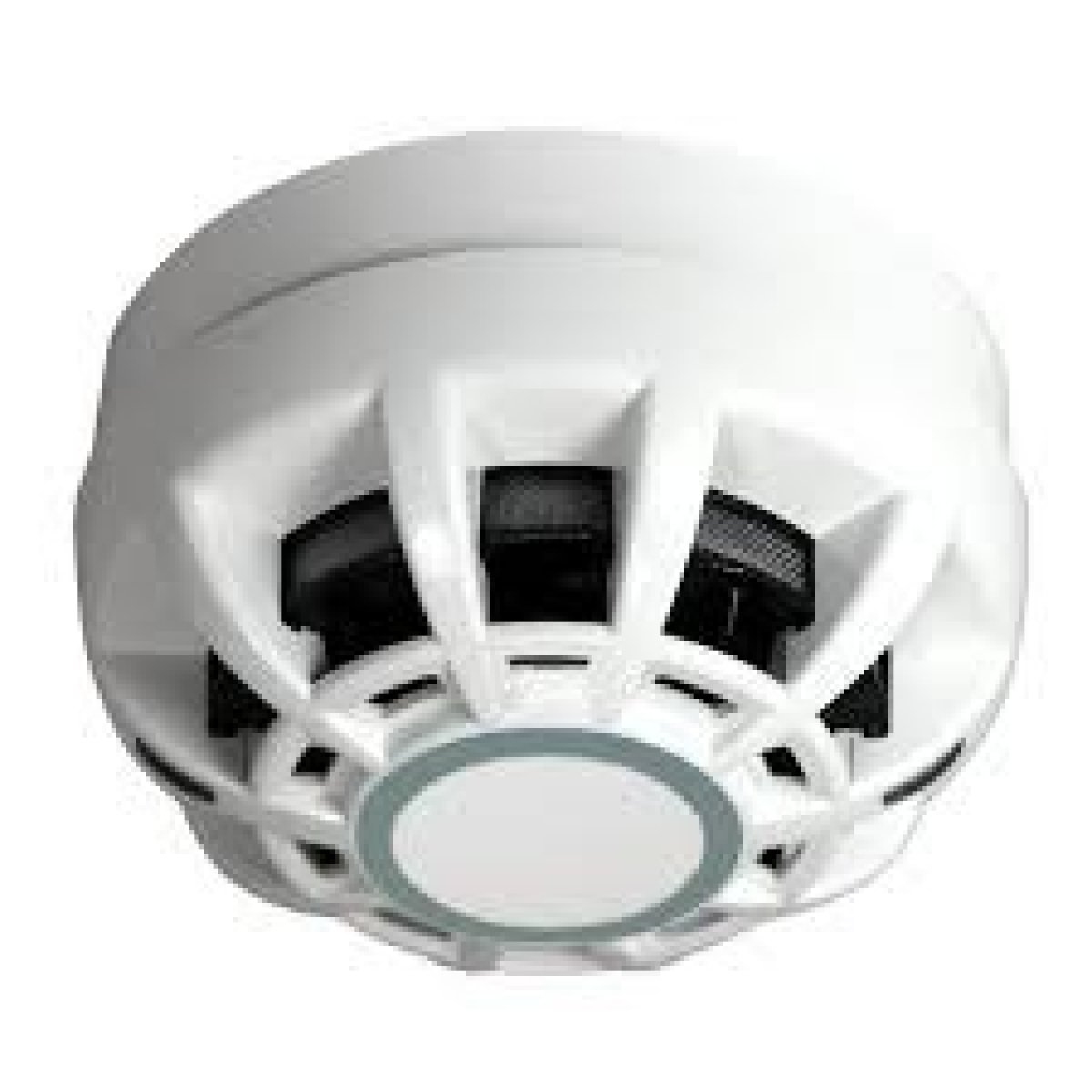
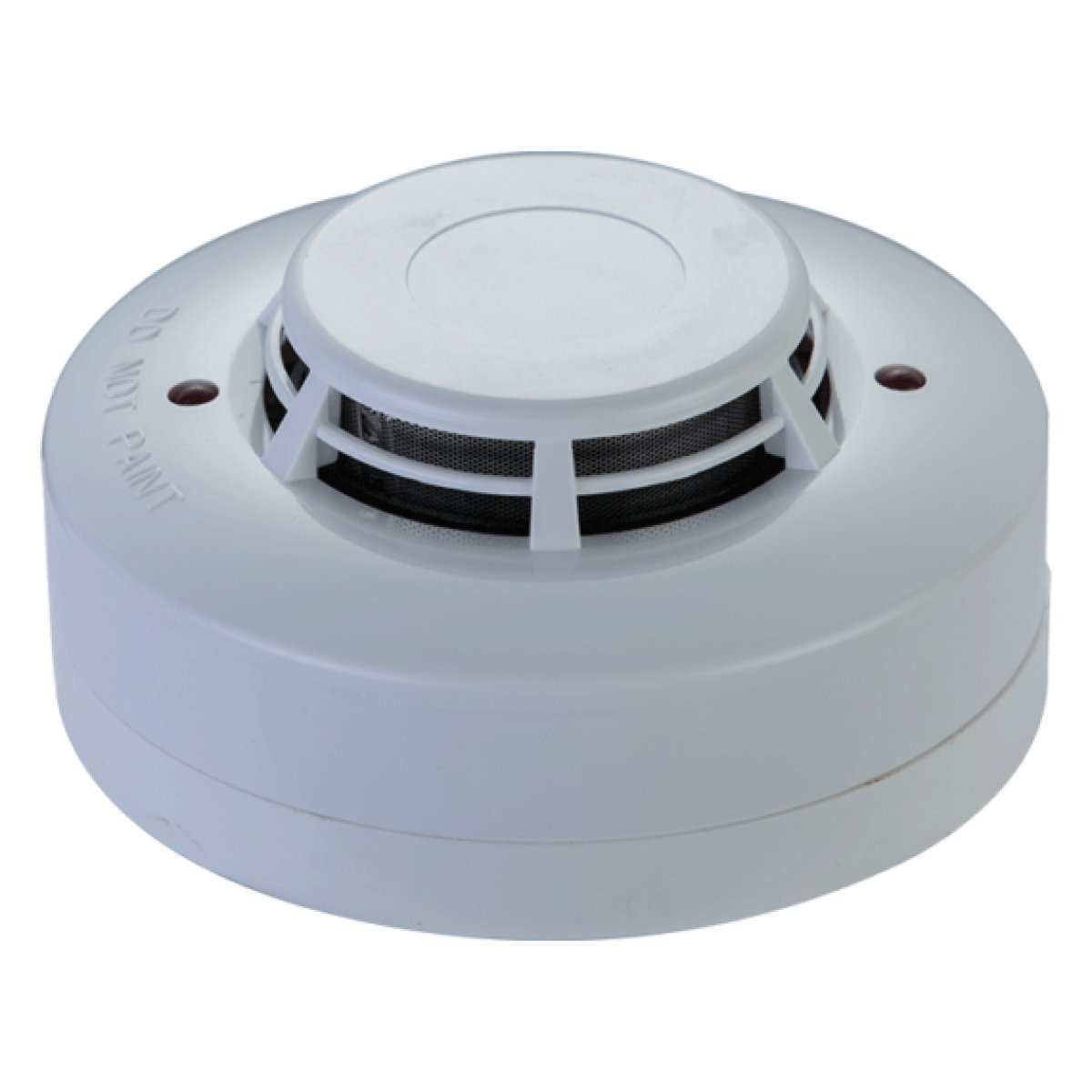
An advanced addressable smoke detector designed to quickly detect visible smoke particles from smoldering fires. Its optical sensing, digital filtering, and automatic drift compensation provide reliable fire detection while minimizing false alarms.
High-Sensitivity Photoelectric Air Sampling for Early-Stage Intervention
In commercial towers, server vaults, and industrial spaces, early detection is the single most critical factor in minimizing structural damage and ensuring occupant survival. Most structural fires begin as slow, smoldering blazes—such as overloaded electrical wiring inside a wall cavity or a discarded cigarette on office furniture—generating massive volumes of toxic smoke long before open flames appear. An Intelligent Photoelectric Smoke Detector is engineered specifically to spot these early smoldering threats, initiating building alarms and automated ventilation overrides before conditions become critical.
The device operates on an advanced optical light-scattering principle. Inside the impact-resistant polymer shell is an isolated, labyrinth-walled sensing chamber that allows air to pass through freely while completely blocking out external ambient room light. Inside this dark chamber, an infrared LED light source pulses a tight beam of light across the room, directed away from a highly sensitive photodiode light receptor.
Under normal, clean-air conditions, the light beam shoots straight across into a light trap and is absorbed. However, when smoke particles enter the chamber, they disrupt the light beam, scattering the infrared light rays in multiple directions. A fraction of this scattered light strikes the photodiode, triggering an internal electrical current. The detector's built-in microprocessor analyzes this signal spike, evaluates its density, and instantly reports an emergency alarm condition back to the main Fire Alarm Control Panel (FACP).
Key Performance Features
Advanced Digital Signal Processing (DSP): The internal microprocessor runs smart algorithmic smoothing software that analyzes light scattering patterns over time, easily differentiating between actual combustion smoke and sudden bursts of dust or steam to cut false alarms by up to 90%.
Automatic Dust Drift Compensation: Automatically tracks and compensates for internal dust accumulation inside the optical chamber over time, dynamically adjusting its factory sensitivity window to prevent "dirty detector" trouble faults and false trips.
Precision Addressable SLC Networking: Connects to the main FACP via a two-wire Signaling Line Circuit, utilizing dual rotary switches or digital software encoding to assign a unique device address. This allows emergency responders to pinpoint the exact room number and floor location of a fire instantly.
Dual-LED $360^{\circ}\text{ Visual Status Rings}$: Outfitted with twin multi-color LEDs positioned on opposite sides of the outer trim, providing a clear visual status indicator from any angle: flashing green during normal standby monitoring, amber during a fault condition, and solid red during an active fire alarm.
Built-In Short Circuit Fault Isolation (Optional): Features an integrated hardware isolator module that automatically opens a branch segment if a wire short circuit is detected on the loop, protecting the rest of the network devices from dropping offline.
Eco-Friendly Radioactive-Free Sensing: Built entirely on optical photoelectric principles, completely eliminating the radioactive materials (such as Americium-241) used in old ionization-style detectors, making recycling and disposal straightforward.
Ideal Infrastructure Applications
Commercial Multi-Story Office Complexes: Flush ceiling mounts inside open-plan bullpens, main executive boardrooms, and long egress hallways.
Telecommunication Hubs & Server Vaults: High-sensitivity adjustments deployed near cooling intake grids to intercept electrical component overheating.
Hotels & Institutional Facilities: Low-profile integration alongside addressable sounder bases to provide targeted, room-level voice or tone evacuation signaling.
Technical Performance MatrixEngineering Metric ParameterAddressable Photoelectric ProfileConventional 4-Wire System ProfileSensing Technology CoreOptical Photoelectric Light ScatteringOptical Photoelectric Light ScatteringOperating Current LoopTwo-Wire Supervised SLC Loop4-Wire Loop ($2\times\text{ Power}, 2\times\text{ Relay}$)Standard Input Voltage15V DC to 32V DC Digital Pulse12V DC or 24V DC Fixed SystemStandby Current ConsumptionUltra-low $\le 300\ \mu\text{A}$ typical$\le 50\ \mu\text{A}$ typicalSensitivity Testing Envelope0.5% to 4.0% Obscuration / Foot (UL certified)Factory Fixed Sensitivity OnlyEnclosure Structural CompoundHigh-Impact Fire-Retardant ABS PolymerHigh-Impact Fire-Retardant ABS PolymerCompliance CertificationsUL 268 Listed / EN 54-7 ComplianceUL 268 Listed / CE Fire ApprovedStandard Procurement Package Components
Intelligent Addressable Photoelectric Smoke Detector Head
Low-Profile Universal Twist-Lock Mounting Base Plate
Factory Removable Plastic Dust Shroud Cover (To protect the chamber during building construction phases)
Technical Device Address Configuration Log and Installation Guide
Optional System Add-ons: Remote LED Output Indicators, Addressable Relays/Sounder Base Attachments, and Anti-Vandal Mechanical Locking Skirts (Sold Separately based on design project scope)