
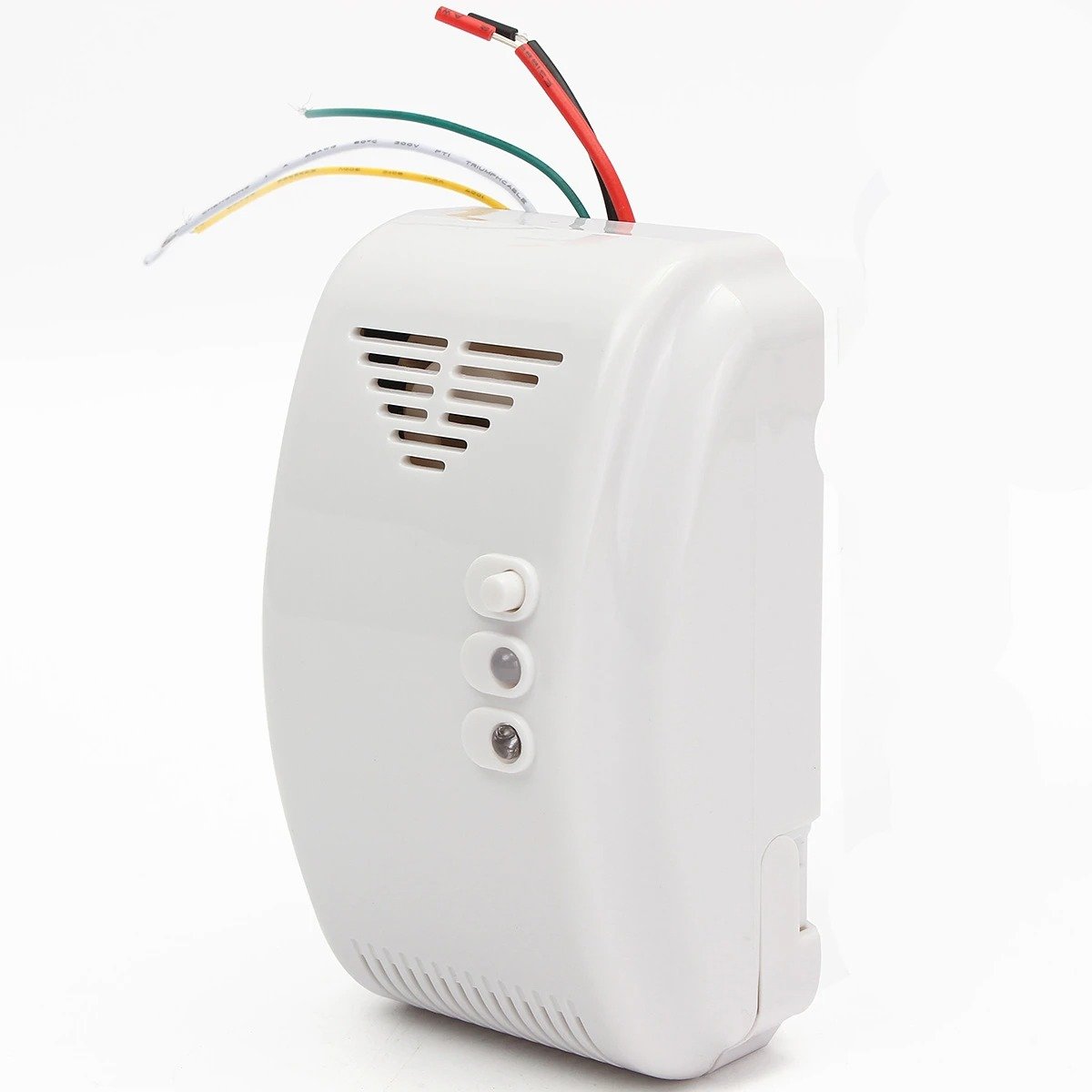
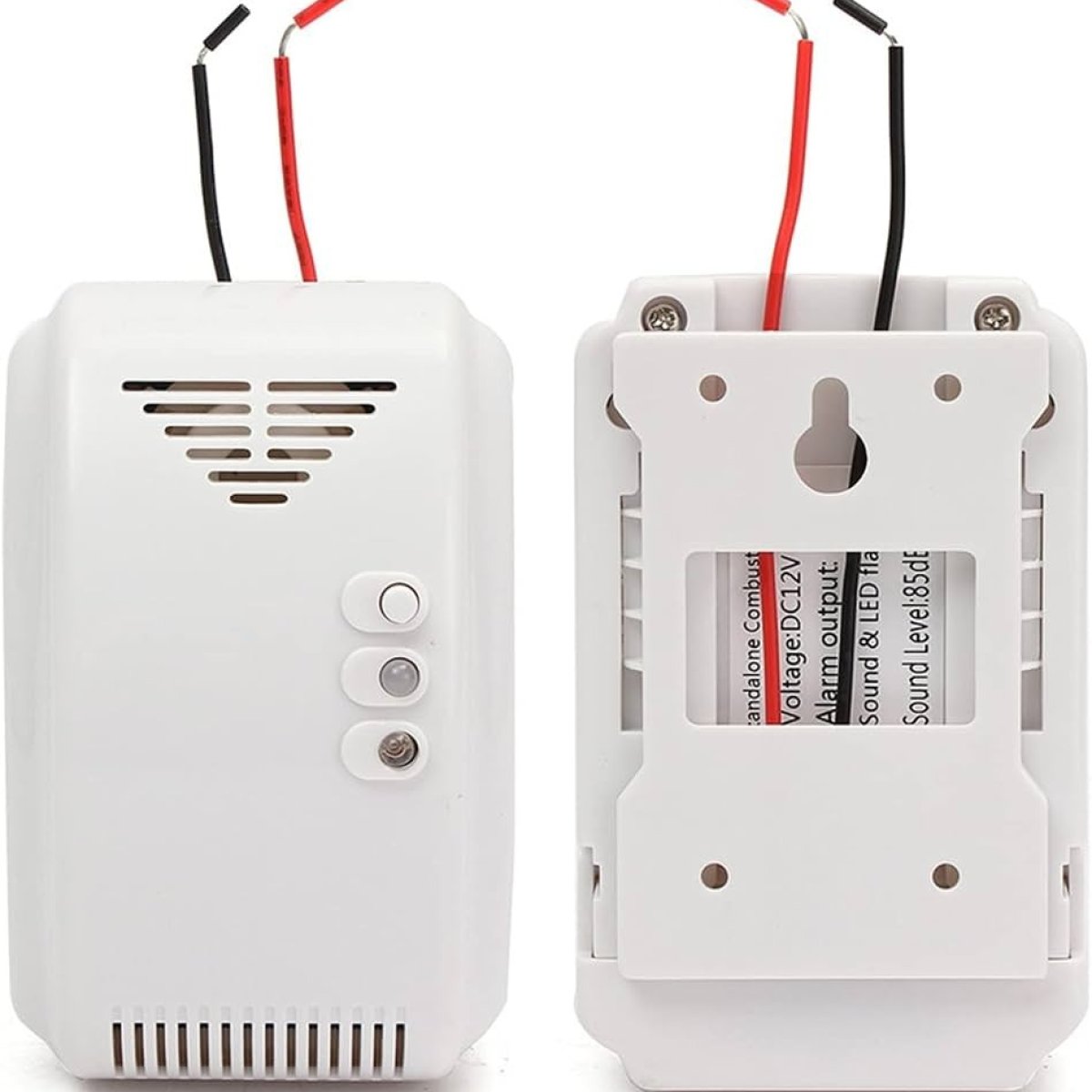
Fixed-Point Intelligent Combustible and Toxic Gas Detector An industrial-grade, explosion-proof fixed gas detection transmitter designed to continuously monitor ambient air for hazardous concentrations of explosive hydrocarbons, toxic gases, or oxygen depletion. Housed in a rugged, weather-sealed enclosure (ATEX/IECEx certified) and utilizing hot-swappable smart sensor cartridges, this device outputs real-time gas telemetry via a 4–20mA analog loop, RS-485 Modbus, or internal alarm relays to trigger automated ventilation overrides and emergency facility shutdowns.
Continuous Atmospheric Surveillance for Hazard Mitigation
In industrial plant rooms, wastewater treatment facilities, chemical warehouses, and subterranean utility networks, invisible gases present a constant, deadly threat. Toxic gas leaks (like Carbon Monoxide or Hydrogen Sulfide) can quickly incapacitate workers, oxygen displacement can cause asphyxiation in confined spaces, and volatile hydrocarbon accumulations can turn a minor electrical spark into a catastrophic explosion. A Fixed-Point Gas Detector serves as a permanent atmospheric sentinel, continuously measuring gas concentrations at a molecular level to initiate alarms before environmental conditions reach hazardous thresholds.
The transmitter uses a modular design to support three primary gas-sensing technologies, matching the detector to the specific target hazard profile:
1. Electrochemical Sensors (For Toxic Gases and Oxygen Monitoring)
Molecular Oxidation Dynamics: Target gas molecules diffuse through a porous membrane into an internal chemical cell, triggering a chemical reaction that generates a tiny electrical current. The current scales proportionally with the gas concentration, allowing the microprocessor to output ultra-precise parts-per-million (ppm) or volume-percentage ($\%\text{ Vol}$) readings.
2. Catalytic Bead / Pellistor Sensors (For Combustible Gases)
Thermal Resistance Profiling: Features an active element coated with a catalyst alongside a matched inert reference bead. When combustible gases pass over the sensor, they oxidize exothermically on the active bead, raising its temperature and altering its electrical resistance relative to the reference bead. This shift is measured via a Wheatstone bridge circuit to calculate the Lower Explosive Limit ($\%\text{ LEL}$) of the atmosphere.
3. Non-Dispersive Infrared / NDIR Sensors (For Volatile Hydrocarbons and $CO_2$)
Optical Absorption Metrics: Directs an infrared light beam through a sampling gas chamber toward a narrow-band optical filter and detector. Because hydrocarbon molecules naturally absorb specific wavelengths of infrared light, the detector measures the light attenuation to calculate gas density. NDIR technology is entirely immune to chemical poisoning or silicone desensitization, offering exceptional stability in low-oxygen or high-dust settings.
Key Performance Features
Explosion-Proof Heavy-Duty Housing: Cast from copper-free aluminum or Grade 316 stainless steel, fully certified to ATEX / IECEx Zone 1 and Zone 2 hazardous area standards.
Intelligent Hot-Swappable Smart Sensors: Sensors are pre-calibrated and plug directly into the transmitter base. The main board automatically recognizes the sensor type, calibration curves, and alarm limits upon connection, allowing for rapid, tool-free field replacements.
High-Visibility Local LCD Interface: Outfitted with a backlit graphic LCD displaying real-time gas concentrations, target gas types, and diagnostic fault codes, paired with a non-intrusive magnetic wand interface for tool-free calibration without opening the enclosure.
Tri-Mode Operational Relay Outputs: Equipped with three internal Form C dry-contact relays (Alarm 1/Low, Alarm 2/High, and Fault), enabling direct control over localized exhaust fans, automated gas shut-off valves, or external strobe horns.
Global Output Compatibility: Features standard 4–20mA analog loop outputs alongside an RS-485 Modbus RTU digital communication link, allowing drop-in integration into central Fire Alarm Control Panels (FACP), Programmable Logic Controllers (PLC), or localized Building Management Systems (BMS).
Ideal Infrastructure Applications
Commercial Boiler & Mechanical Rooms: Continuous monitoring for Carbon Monoxide ($CO$) accumulation and natural gas ($CH_4$) line breaches.
Battery Charging Rooms & UPS Vaults: Deployed at the highest ceiling points to intercept Hydrogen ($H_2$) gas outgassing during high-rate battery charging cycles.
Wastewater Treatment & Sewage Pump Stations: Low-point installations tracking toxic Hydrogen Sulfide ($H_2S$) build-up and localized Oxygen ($O_2$) depletion pockets.
Technical Performance MatrixEngineering Metric ParameterCombustible Gas Profile (NDIR/Catalytic)Toxic Gas Profile (Electrochemical)Sensing Technology OptionsNon-Dispersive Infrared (NDIR) / Catalytic BeadPrecision Electrochemical Cell MatrixTarget Gas ExamplesMethane ($CH_4$), Propane, Hydrogen ($H_2$)Carbon Monoxide ($CO$), Hydrogen Sulfide ($H_2S$), $O_2$Standard Measuring Range$0\text{ to }100\%\text{ LEL (Lower Explosive Limit)}$$0\text{–}100/500\text{ ppm or }0\text{–}25\%\text{ Vol for }O_2$Response Time Window ($T_{90}$)$\le 15\text{ Seconds (NDIR)} / \le 30\text{ Sec (Catalytic)}$$\le 15\text{ to }30\text{ Seconds depending on gas type}$Enclosure Ingress ArmorATEX/IECEx Explosion Proof / IP66 / IP67ATEX/IECEx Explosion Proof / IP66 / IP67Operating Input Supply24V DC Nominal (Range: 18V DC to 32V DC)24V DC Nominal (Range: 16V DC to 30V DC)Compliance CertificationsUL Listed / FM Performance Certified / CEUL Listed / FM Performance Certified / CEStandard Procurement Package Components
Fixed-Point Explosion-Proof Gas Detector Transmitter Base
Specified Intelligent Pre-Calibrated Plug-in Smart Sensor Cartridge
Magnetic Programming Calibration Wand (For tool-free menu navigation)
Factory Calibration, Gas Target Profile, and Explosion-Proof Integrity Certificates
Optional System Add-ons: Splash Guards / Weather Caps (for outdoor wet locations), Remote Calibration Adaptors, and Integrated Audio-Visual Strobe Horn Attachments (Sold Separately based on project design BOQ constraints)