
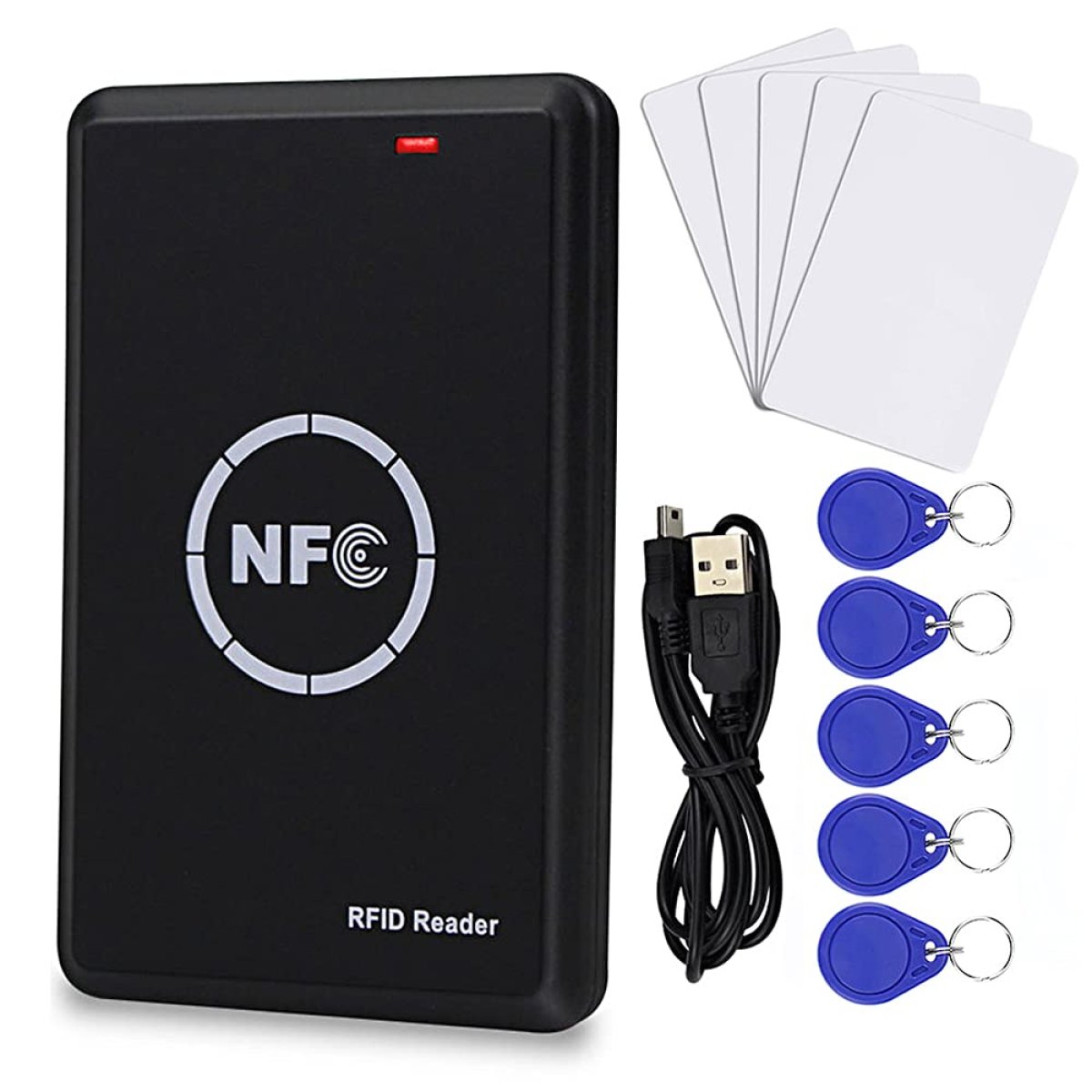
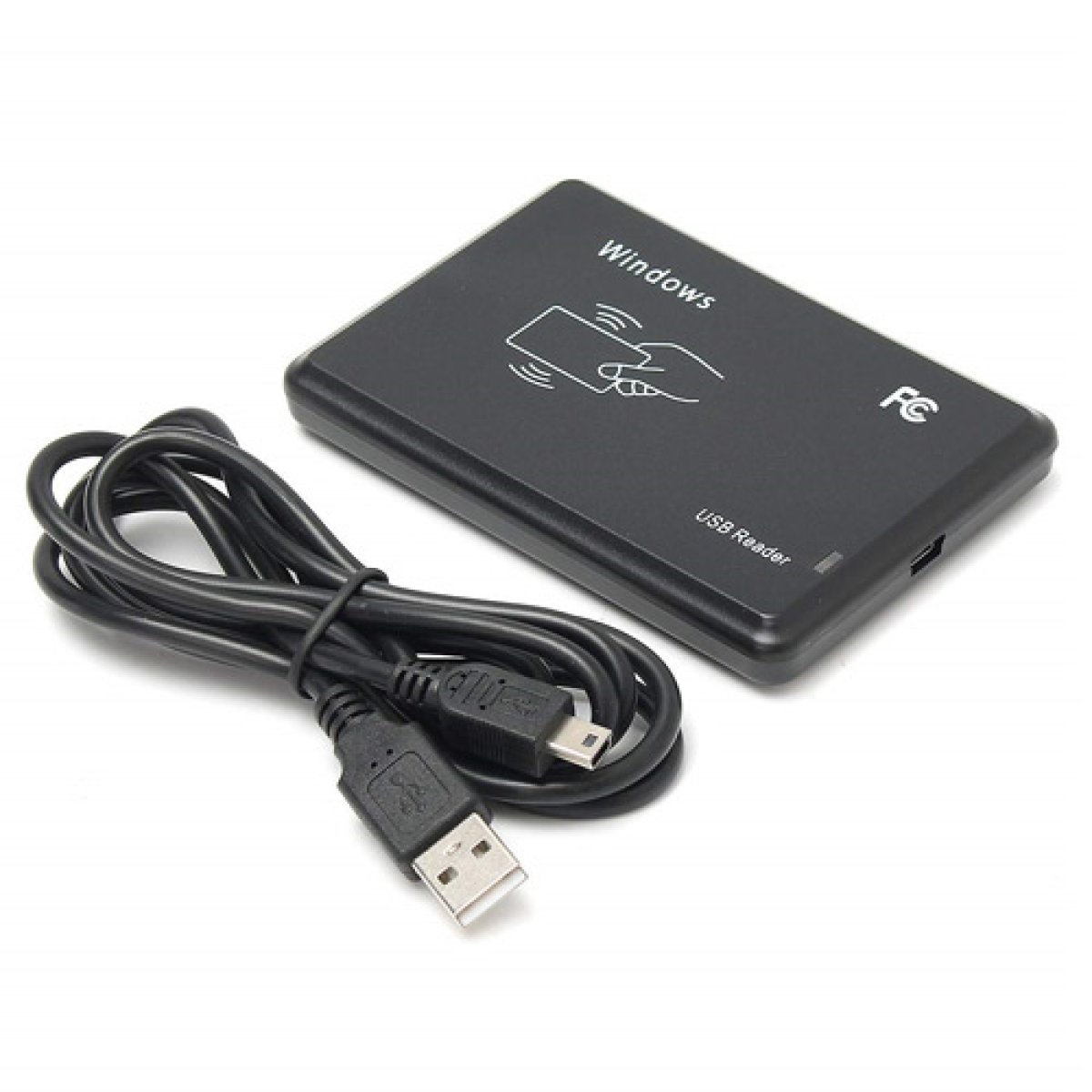
RFID Proximity Card Reader An enterprise-grade, high-security contactless smart card reader designed to interface seamlessly with centralized physical access control systems. Featuring multi-frequency capabilities that read both 125 kHz proximity and 13.56 MHz smart cards (including MIFARE DESFire), this sleek, vandal-resistant edge reader supports encrypted OSDP V2 and Wiegand communication protocols to deliver instant credential authentication ($<0.1\text{ seconds}$) across high-volume commercial entrances.
Secure Credential Verification at the Physical Access Perimeter
In modern physical security design, the wall-mounted card reader serves as the primary touchpoint between building occupants and the facility's security infrastructure. Legacy proximity card systems operating on low-frequency waves transmit card numbers in unencrypted, open text format, making them highly vulnerable to cheap handheld cloning devices. A modern RFID Card Reader eliminates this security gap by utilizing high-frequency smart card technology backed by cryptographic encryption algorithms, ensuring absolute data integrity at every facility entry point.
The reader functions as an advanced data transceiver. When an employee presents an RFID card or key fob within a 3 to 10 cm read range, the reader's internal copper antenna emits a localized RF field that powers up the passive chip embedded within the card.
The card and reader instantly perform a secure cryptographic handshake, verifying authorization keys before the reader extracts the cardholder's credential data. The terminal then translates this credential into a digital bitstream, passing it securely upstream to a central Access Control Unit (ACU) via an encrypted data bus, allowing the panel to actuate the door lock within milliseconds.
Core Frequency & Credential Profiles
Modern RFID readers are typically specified as multi-technology units to support both secure modern standards and legacy corporate badge migrations:
1. 13.56 MHz High-Frequency Smart Cards (Secure Standard)
Cryptographic Data Protection: Utilizes advanced encryption algorithms (such as AES-128) to secure communication between the card and the reader head.
Supported Protocols: MIFARE DESFire EV1/EV2/EV3, HID iCLASS SE, and standard ISO 14443A configurations.
2. 125 kHz Low-Frequency Proximity (Legacy Fallback)
Long-Range Proximity Matching: Provides a larger physical read range but lacks data encryption.
Supported Protocols: Standard HID Prox, EM4100, and generic 26-bit proximity formats.
Key Performance Features
Native OSDP V2 Encryption Protocol: Supports Open Supervised Device Protocol (OSDP) over an RS-485 bus, establishing a secure, fully encrypted bidirectional data channel with the central control panel to prevent line wire-sniffing or tampering exploits.
Wiegand Protocol Backward Compatibility: Outfitted with standard legacy Wiegand bit-stream output wiring, ensuring drop-in compatibility with older pre-existing central control panel risers.
Heavy-Duty Weatherproof and Vandal Armor: Sealed inside a rugged, UV-stabilized polycarbonate shell with an epoxy-poured internal potting core, earning an IP65/IP67 ingress rating suitable for extreme outdoor rain, ice, and wash-down environments.
Tri-Color Diagnostic LED and Internal Buzzer: Features a high-visibility light bar and clear acoustic sounder that instantly signal authorization status (Green for access granted, Red for access denied, Amber for system standby).
Integrated Optical Tamper Sensor: Outfitted with an internal light-sensitive sensor on the backplate. If an intruder attempts to wrench the reader body off the structural wall surface, it immediately sends a priority tamper alarm to the central security desk.
Ideal Infrastructure Applications
Commercial Office Entrance Glass Turnstiles: Providing high-throughput badge scanning ($<0.1\text{ seconds}$) to prevent pedestrian bottlenecks during morning shift arrivals.
Subterranean Parking Garage Gate Pedestals: Mounted on exterior gooseneck pillars to allow drivers to scan credentials cleanly from a vehicle window.
Healthcare Hospital Surgical Corridors: Deployed alongside automated door actuators to manage authorized access into sterile medical environments.
Technical Performance MatrixEngineering Metric ParameterPremium Multi-Tech Smart ReaderStandard Proximity Card ReaderOperating Frequency Arrays13.56 MHz High-Freq + 125 kHz Low-Freq125 kHz Low-Frequency FixedCredential Encryption CoreAES-128 Bit Cryptographic HandshakeNone (Open Unencrypted Bitstream)Read Range Proximity Window3 cm to 8 cm ($1.2"\text{ to }3.1"$)5 cm to 10 cm ($2"\text{ to }4"$)Primary System InterfacesOSDP V2 (Encrypted RS-485) / WiegandWiegand 26-Bit / 37-Bit Output OnlyOperating Voltage Input12V DC Regulated Nominal Supply5V DC to 16V DC Linear PowerAverage Operational Current$\le 60\text{ mA}$ standby / $\le 120\text{ mA}$ peak peak$\le 40\text{ mA}$ average power drawEnclosure Protection ProfileIP65/IP67 Fully Potted PolycarbonateIP54 Basic Weather SplashingMechanical Mounting FootprintMullion Profile (Sleek Door Frame Fit)Standard Single-Gang Wall Switch BoxCompliance CertificationsUL 294 Listed / CE / FCC / RoHSCE / FCC ApprovedStandard Procurement Package Components
Multi-Technology Contactless RFID Edge Card Reader Unit
Form-Fitting Wall Mounting Plate Adaptor Bracket and Anchors
Intergrated 45 cm ($18"$) Multi-Conductor Shielded Pigtail Cable Harness
Structural Enclosure Anti-Tamper Pin-Torx Security Locking Screws
Factory Configuration Setup Guide and Wiring Termination Schematic
Optional System Add-ons: Spacer Plates (for thermal isolation on metal door frames), Heavy-Duty Vandal-Resistant Stainless Steel Cage Guards, and Custom Printed Corporate Logo Badges (Sold Separately based on design project site BOQ requirements)