
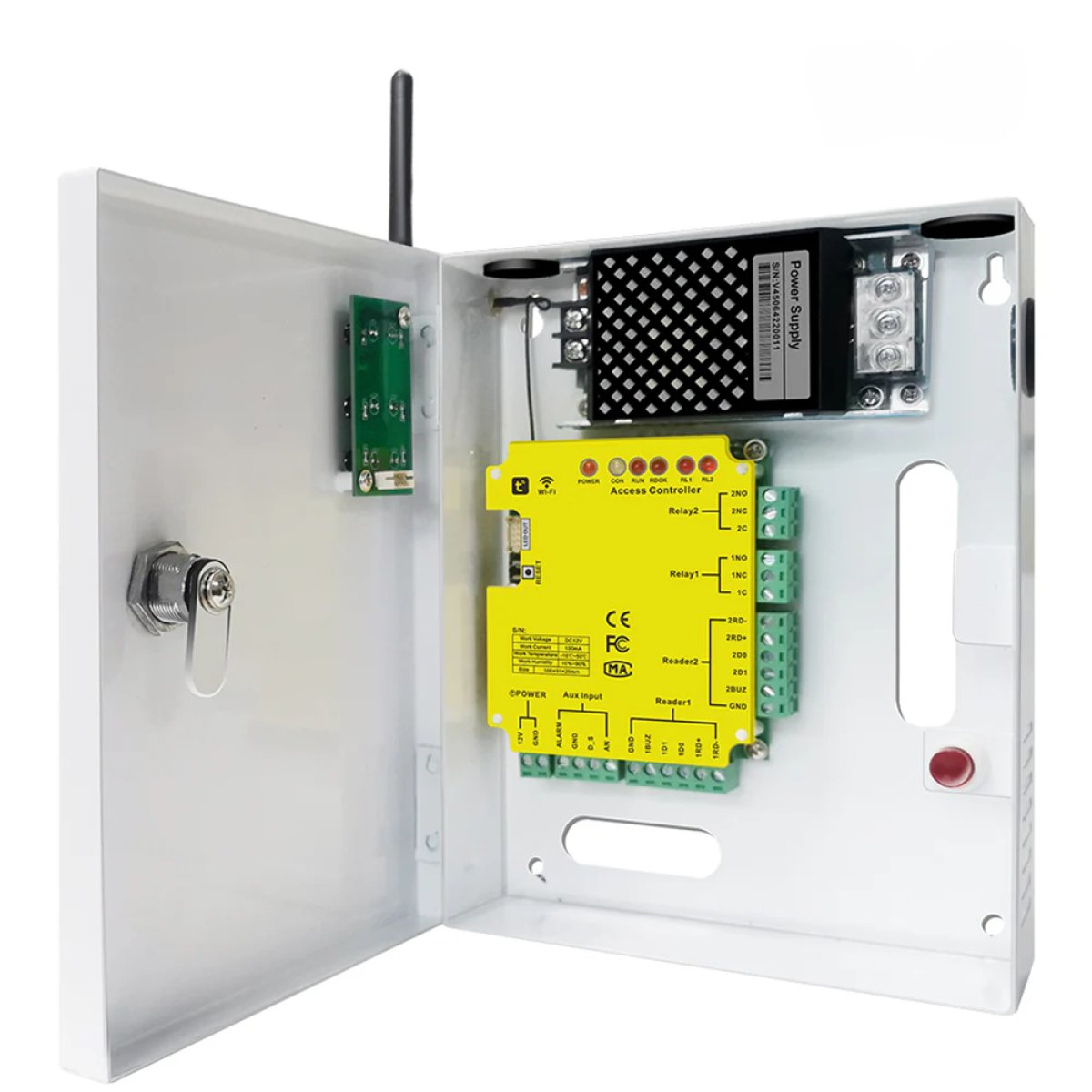
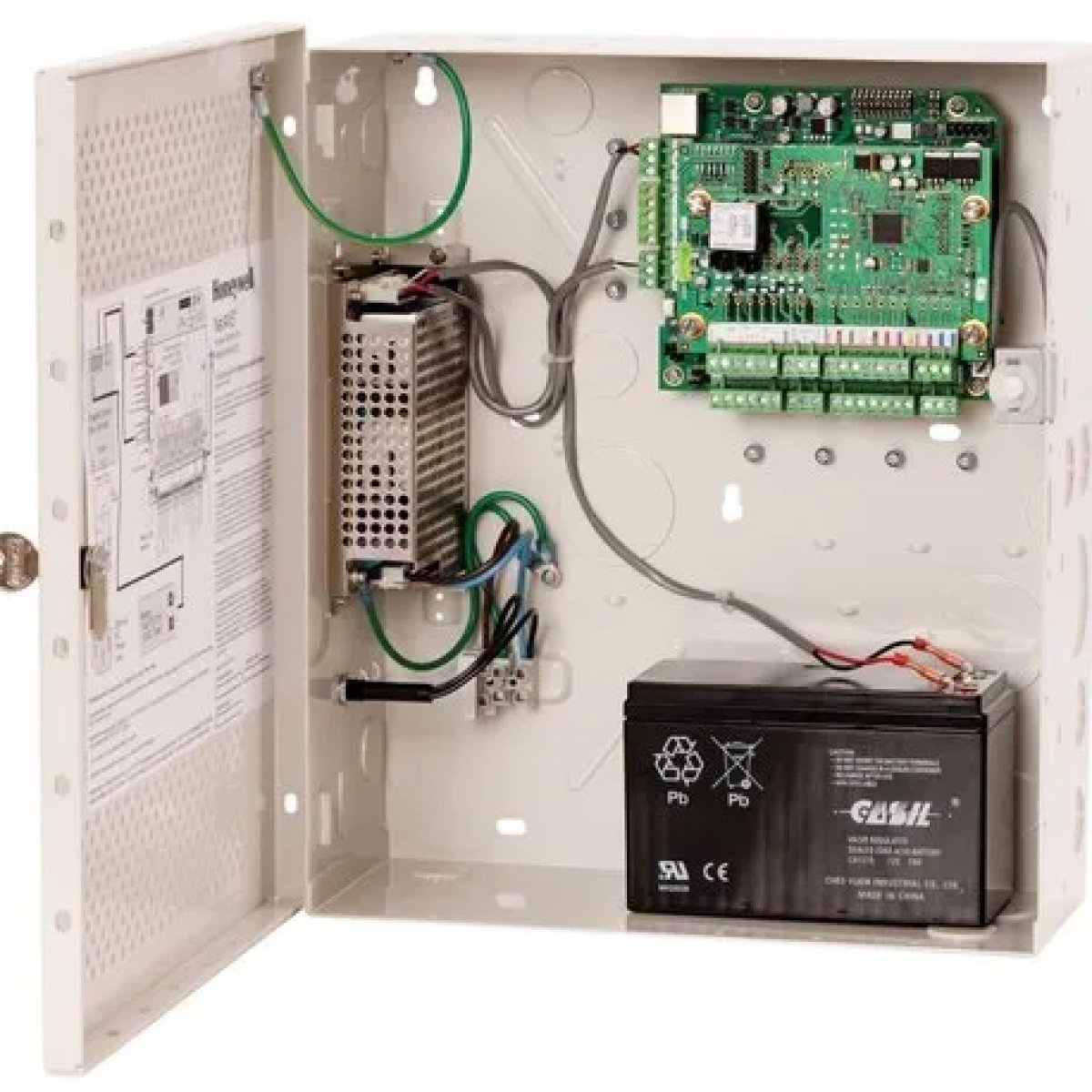
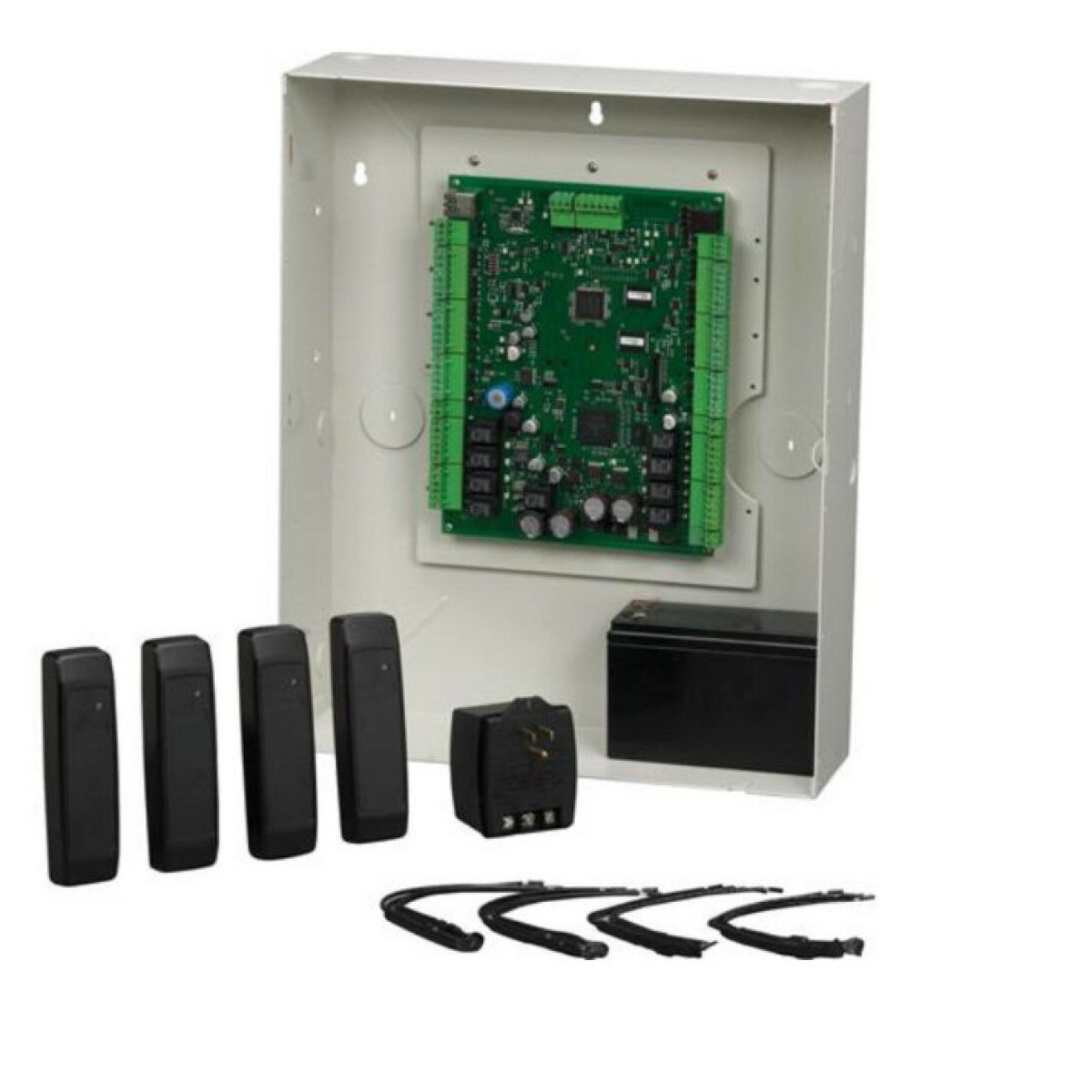
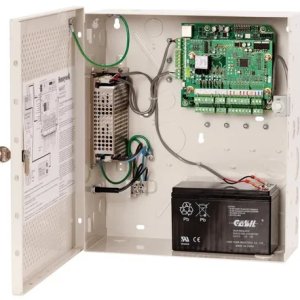
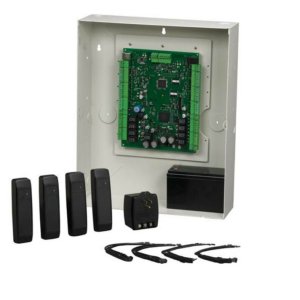
Network Access Control Panel An enterprise-class, IP-based central control unit (ACU) engineered to manage distributed security credentials, processing rules, and physical locking mechanisms across multiple facility portals simultaneously. Driven by a high-speed 32-bit onboard processor with native TCP/IP network interfaces, this centralized controller coordinates reader data, exit buttons, door position sensors, and fire alarm overrides to enforce real-time perimeter defense completely offline.
Centralized Processing Infrastructure for True Physical Security
In commercial facility design, installing standalone locking electronics directly on a door frame creates a significant security risk for perimeter boundaries. If a card reader or code pad mounted on an exterior wall contains the physical relays that drop power to the lock, an intruder could tear the reader off the wall, short-circuit the internal wiring, and open the door. A Network Access Control Panel eliminates this vulnerability by moving the brains, intelligence, and physical locking relays into a secure, centralized location—such as an IT room, electrical riser cupboard, or back-of-house security locker.
The panel functions as the central operating hub of the building's physical security loop. Edge devices mounted at the door (including RFID proximity readers, PIN pads, and biometric scanners) act as data collectors. When an occupant presents a credential, the raw data stream is transmitted over a secure, supervised wire run back to this central controller.
The controller evaluates the credential against its localized access level permissions, schedule matrices, and holiday profiles within milliseconds. If access is granted, the panel triggers an isolated, onboard mechanical Form C relay to actuate the door stroke or magnetic lock, while instantly pushing a timestamped event log up to the main security management server.
Strategic System Topologies
Centralized access panels are specified based on the spatial density of the facility layout and required door nodes per zone:
1. 2-Door / 4-Door Controller Configurations
Localized Infrastructure Zones: Equipped with dedicated reader inputs and a balanced complement of input/output circuits to manage up to four independent portals.
Best For: Small corporate offices, server rooms, private clinics, and elevator cab control banks.
2. 8-Door / Expandable Master Panels
High-Density Scalable Platforms: Built with heavy-duty power regulation blocks and expansion bus headers to control large clusters of turnstiles or office doors from a single enclosure footprint.
Best For: Large logistics warehouses, university campuses, manufacturing plants, and high-rise commercial office corridors.
Key Performance Features
Complete Offline Standby Autonomy: Stores up to 100,000 unique credential cards and retains a local, non-volatile log buffer of 200,000 transaction events. If the primary building network or corporate server drops completely offline, the panel continues to enforce security with zero disruption.
Dual Reader Protocol Interfaces: Features independent input channels supporting both legacy Wiegand bit-stream reader connections and advanced OSDP V2 (Open Supervised Device Protocol) channels, enabling fully encrypted, bidirectional communication with modern smart card readers.
Supervised Input Circuit Monitoring: Door position switches (DPS) and Request-to-Exit (REX) buttons are monitored using end-of-line (EOL) resistor networks, allowing the panel to instantly detect if an intruder has cut, shorted, or tampered with the perimeter device wiring.
Hardwired Emergency Fire Alarm Interlock (FAI): Outfitted with a dedicated, supervised input node that links straight to the building's main Fire Alarm Control Panel (FACP). Upon receiving an emergency evacuation signal, the controller automatically drops power to all fail-safe electromagnetic locks to guarantee code-compliant, unhindered emergency egress.
Advanced Automation Logic Processing: Natively manages high-tier security parameters, including hard/soft anti-passback rules, timed interlocking (mantrap/airlock control), multi-badge supervisor validation, and auxiliary alarm tracking outputs.
Ideal Infrastructure Applications
Commercial Office Multi-Floor Risers: Grouping multiple multi-door panels inside localized IT riser closets on every floor to coordinate floor-by-floor office entry doors.
Logistics Hubs & Fulfillment Warehouses: Controlling high-throughput exterior turnstiles, shipping dock barriers, and high-value cage grids.
Healthcare Facilities & Hospitals: Managing access zones into restricted pharmacies, clean rooms, and pediatric wards with strict interlock logic.
Technical Performance MatrixEngineering Metric ParameterMaster 4-Door Network ControllerStandard 2-Door Network ControllerControlled Doors SupportedUp to 4 Doors (Unidirectional / Bidirectional)Up to 2 Doors MaxOnboard Reader Input Ports4 $\times$ OSDP V2 / 4 $\times$ Wiegand Channels2 $\times$ Wiegand Reader Port InterfacesLocal User Credential Capacity100,000 Cardholders / Profiles20,000 Cardholders / ProfilesOffline Non-Volatile Event Buffer200,000 Event Transaction Logs50,000 Event Transaction LogsNative Communication InterfaceTCP/IP Ethernet (RJ-45 10/100M), RS-485TCP/IP Ethernet PortLock Output Configuration4 $\times$ Form C Dry-Contact Relays2 $\times$ Form C Dry-Contact RelaysRelay Contact Rated Capacity5.0A @ 30V DC / 5.0A @ 125V AC2.0A @ 30V DCFire Alarm Interlock (FAI)Dedicated Onboard Supervised Input NodeProgrammable Auxiliary Input TargetEnclosure Shield ProfileHeavy-Duty Lockable 16-Gauge Steel CabinetCompact Plastic/Polymer Housing BaseCompliance CertificationsUL 294 Listed (Access Control) / CE / FCCCE / FCC ApprovedStandard Procurement Package Components
Intelligent Multi-Door Network Access Control Motherboard
Heavy-Duty 16-Gauge Lockable Stamped-Steel Enclosure Cabinet Shield
Integrated AC-to-DC Smart Power Supply Unit (12V/24V DC Selectable) with Battery Charger Circuit
Enclosure Cabinet Cam-Lock Master Keys (Set of 2) and EOL Resistor Component Pack
Factory System Programming Pin-Out Schematic Diagram and Installation Submittal Guide
Required System Add-ons: Sealed Lead-Acid (SLA) 12V Backup Storage Batteries, Downstream Reader/Relay Expansion Boards, and Central Security Server Enterprise Access Software Licenses (Sold Separately based on project network BOQ)