
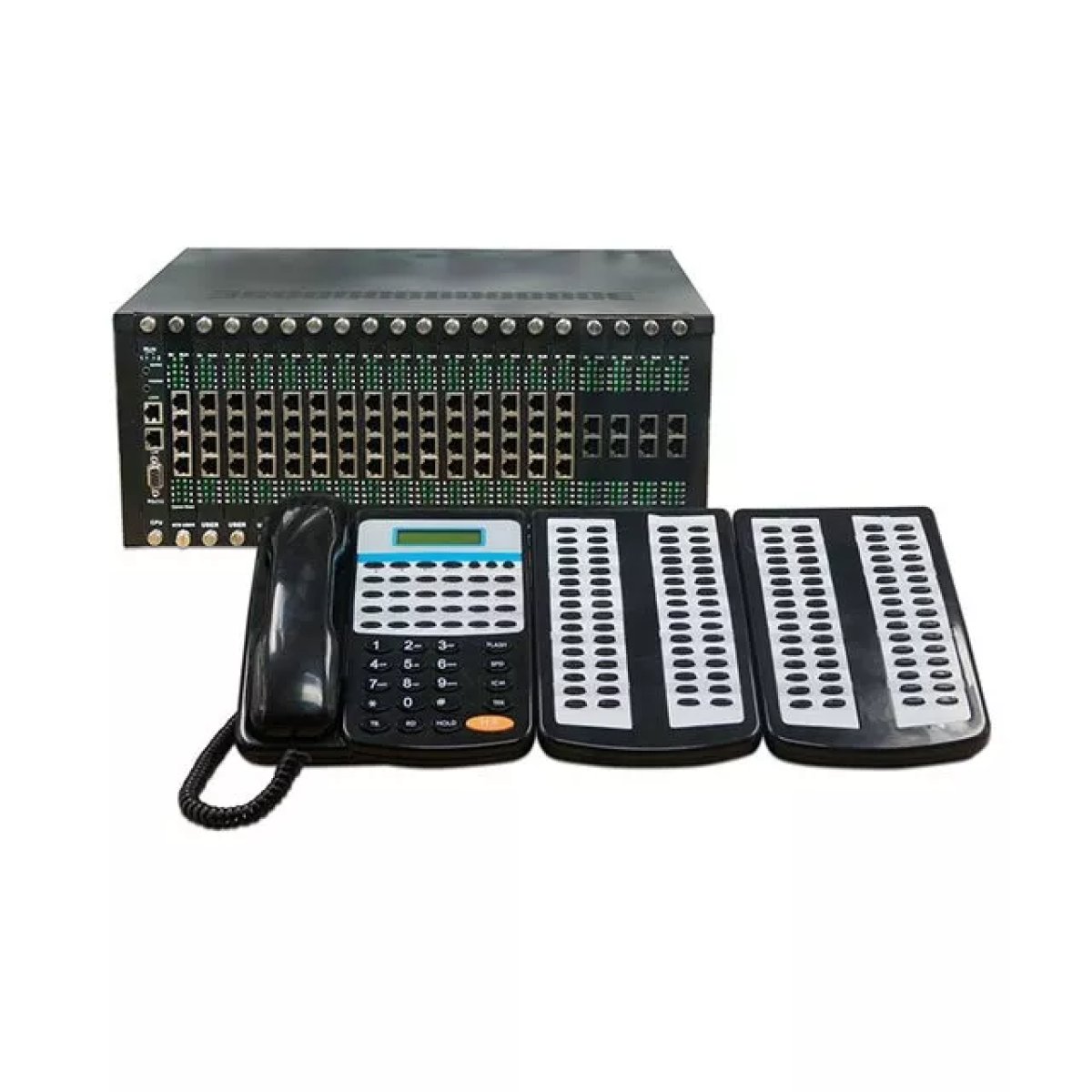
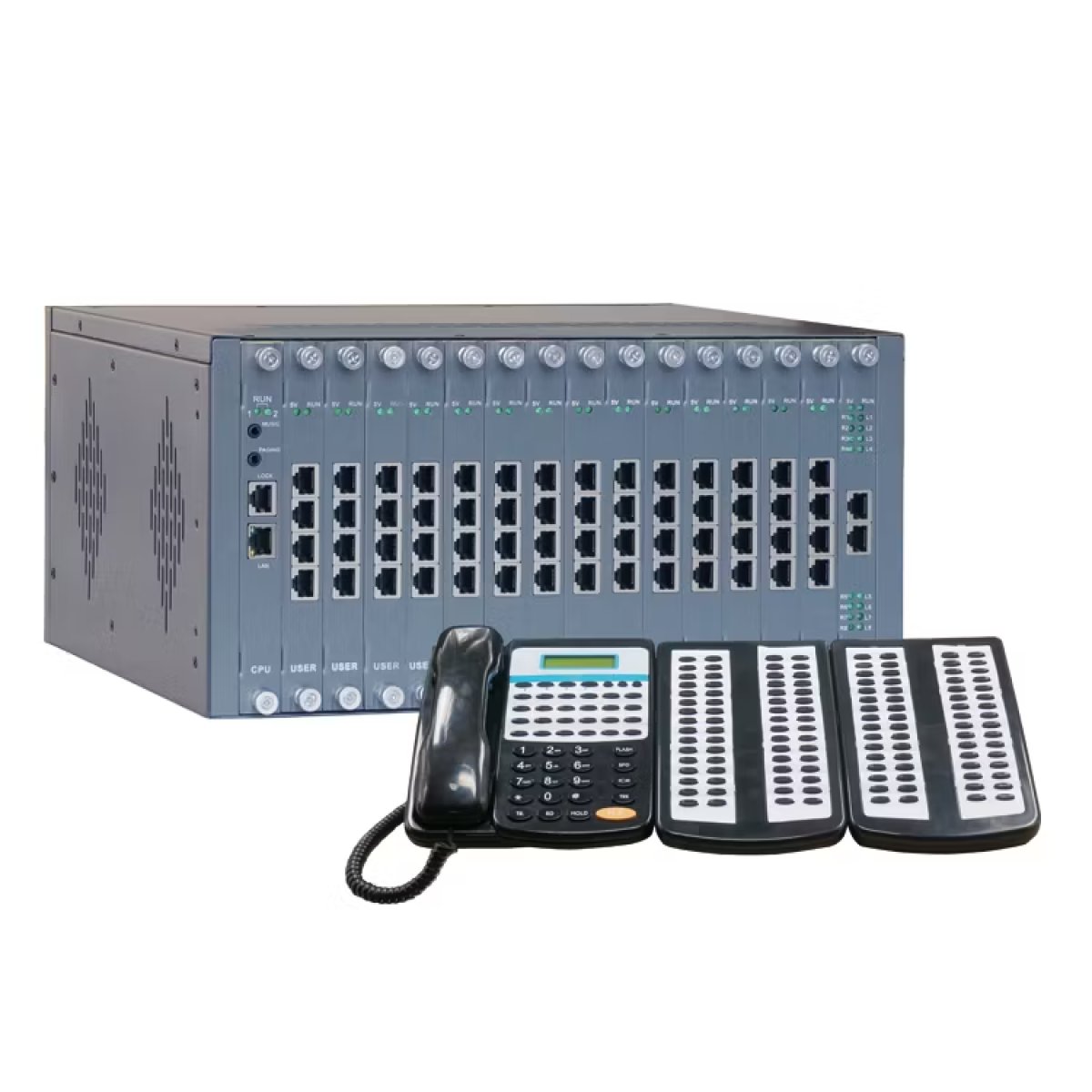
Conventional Analog Private Branch Exchange (PBX) Telephony Switching Matrix A circuit-switched, hardware-driven voice communication appliance engineered to manage localized analog telephone routing within a facility. Operating over dedicated physical copper wiring networks (twisted-pair Cat3/Cat5 lines), this system uses mechanical or solid-state electronic switching crossbars to connect internal standard phone extensions to each other and to a limited pool of external analog Central Office (CO) copper phone lines.
Dedicated Circuit-Switched Telephony for High-Reliability Localized Isolation
Before the arrival of high-speed digital networks and internet-based communication protocols, businesses managed internal calling via dedicated, hardwired on-premises switching hubs. While modern IP-based networks dominate new construction, a conventional Analog PBX System relies entirely on traditional physical circuit switching. It operates completely independently of the facility's local area data network (LAN), the internet, and external data clouds—making it highly resistant to modern network-based cyber threats and network data outages.
The architecture of an analog PBX functions as a physical, localized switching station. Every desk phone inside the facility requires a dedicated, continuous run of copper wire (traditionally two-wire or four-wire "tip-and-ring" telephone cabling) running from the room back to a central main distribution frame (MDF) punch-down block.
When an operator lifts an analog handset, the hook switch closes an electrical circuit, drawing a fixed direct current (DC) voltage from the central PBX. When an extension number is dialed, the internal processor reads the dual-tone multi-frequency (DTMF) tones or rotary line pulses.
The PBX then mechanically or electronically bridges that specific copper pair to another internal room extension pair, or shifts the route to an available external Central Office (CO) Loop-Start Trunk Line. Because it reserves a dedicated physical electrical pathway for the entire duration of the phone conversation, call quality is exceptionally clear and completely free of network packet drops, jitter, or bandwidth strain.
Strategic Functional Topology
Analog telecom systems are typically categorized based on their interface density and physical expansion capabilities:
1. Fixed Configuration Box Systems
Small Business Footprint: Built with a non-expandable chassis featuring a fixed balance of inputs and outputs (e.g., exactly 4 external CO lines and 16 internal extensions).
Best For: Small retail shops, gas stations, and residential estates.
2. Modular Card-Cage Chassis Panels
Scalable Industrial Frames: Engineered with a heavy-duty motherboard containing a set number of universal expansion slots. Engineers pop in specific modular cards (e.g., 8-port FXO trunk input cards or 16-port FXS extension output cards) to scale the system as the workforce grows.
Best For: Industrial factory campuses, marine vessels, and remote mining camps.
Key Performance Features
Absolute Operational Network Isolation: Operates entirely on its own isolated physical wiring framework. It cannot be hacked remotely over the internet, and it will continue to route critical facility voice calls even during complete building data network crashes.
Emergency Lifeline Power Pass-Through: Features dedicated hardware-level power-fail transfer (PFT) relays. If the facility loses electrical power completely and the standby batteries die, the system automatically hooks specific internal extensions directly to the external incoming CO telephone lines, maintaining emergency communication capability.
Direct 50V DC Line Powered Reliability: The central PBX panel steps down building mains power to supply constant operational current directly down the copper pairs to the desk phones, allowing basic analog telephone sets to operate flawlessly without their own individual AC wall plugs.
Legacy Paging and Door Box Bridges: Built-in dry-contact audio auxiliary loops, allowing the system to interface with conventional building public address (PA) amplifier systems or external mechanical entry gate intercom stations.
Ideal Infrastructure Applications
Heavy Industrial Refineries & Rail Yards: Deploying durable, spark-resistant analog equipment across harsh environments where modern digital network equipment would face thermal or environmental damage.
Secure Military & Correctional Facilities: Enforcing physical security perimeters via isolated, non-networked voice lines that are highly resistant to remote digital eavesdropping or software hacking.
Marine & Off-Shore Drilling Vessels: Operating self-contained communication networks that function reliably without requiring continuous internet or satellite links.
Technical Performance MatrixEngineering Metric ParameterModular Industrial Analog PBX FrameCompact Fixed Analog PBX BoxMaximum Telephone Extension LimitsUp to 128 / 256 Local ExtensionsUp to 8 / 24 Local Extensions FixedExternal CO Trunk Line PortsUp to 32 Incoming FXO LinesUp to 4 or 8 Incoming FXO Lines MaxCore Connection Switching MatrixSpace-Division Electronic Circuit SwitchingSolid-State Analog Crosspoint MatrixSignaling Method CompatibilityDTMF Tone / Rotary Dial Pulse SignalsDTMF Tone Frequency SignalingPhysical Extension Wiring Standard2-Wire Tip & Ring (Analog FXS Profile)2-Wire or 4-Wire Key Telephone LineInternal Extension Voltage Supply-48V DC Nominal Talk / 90V AC Ringing-24V DC Nominal Loop SupplyHardware Enclosure Form Profile19-Inch Rack Mount or Wall CabinetCompact Wall-Mount Molded ShroudSystem Power-Fail Transfer (PFT)Integrated Multi-Port Hardware Relay1 Dedicated Emergency Bypass PortCompliance CertificationsFCC Part 68 / CE / RoHS ComplianceCE / FCC ApprovedStandard Procurement Package Components
Main Analog PBX Switching Central Core Processing Chassis
Integrated Linear AC-to-DC Regulated Power Distribution Board
Modular FXO/FXS Interface Expansion Cards (Pre-installed per contract BOQ)
Wall-Mount Structural Hanging Brackets and Equipment Hardware Grounding Straps
Factory Hardware Pin-Out Terminal Map and System Configuration Manual
Required System Add-ons: Standard Analog Desk Phones, Multi-Pair Cat3/Cat5 Riser Cables, 110-Block or 66-Block Telephone Punch-Down Panels, and External Uninterruptible Power Supply (UPS) Batteries (Sold Separately based on design project site layout constraints)